
Cyber Resilience Act
Analyze risks and threats
A detailed risk and threat analysis using TARA is the prerequisite for the CE conformity declaration according to the new Cyber Resilience Act.
As an independent development partner, we carry out threat and risk assessments for products with embedded systems.
Systemically analyze threats and document them in compliance with CRA.
Starting in 2026, manufacturers will have to prove that their connected embedded systems comply with the new EU security requirements. Starting in 2027, only compliant products will be permitted in the EU.
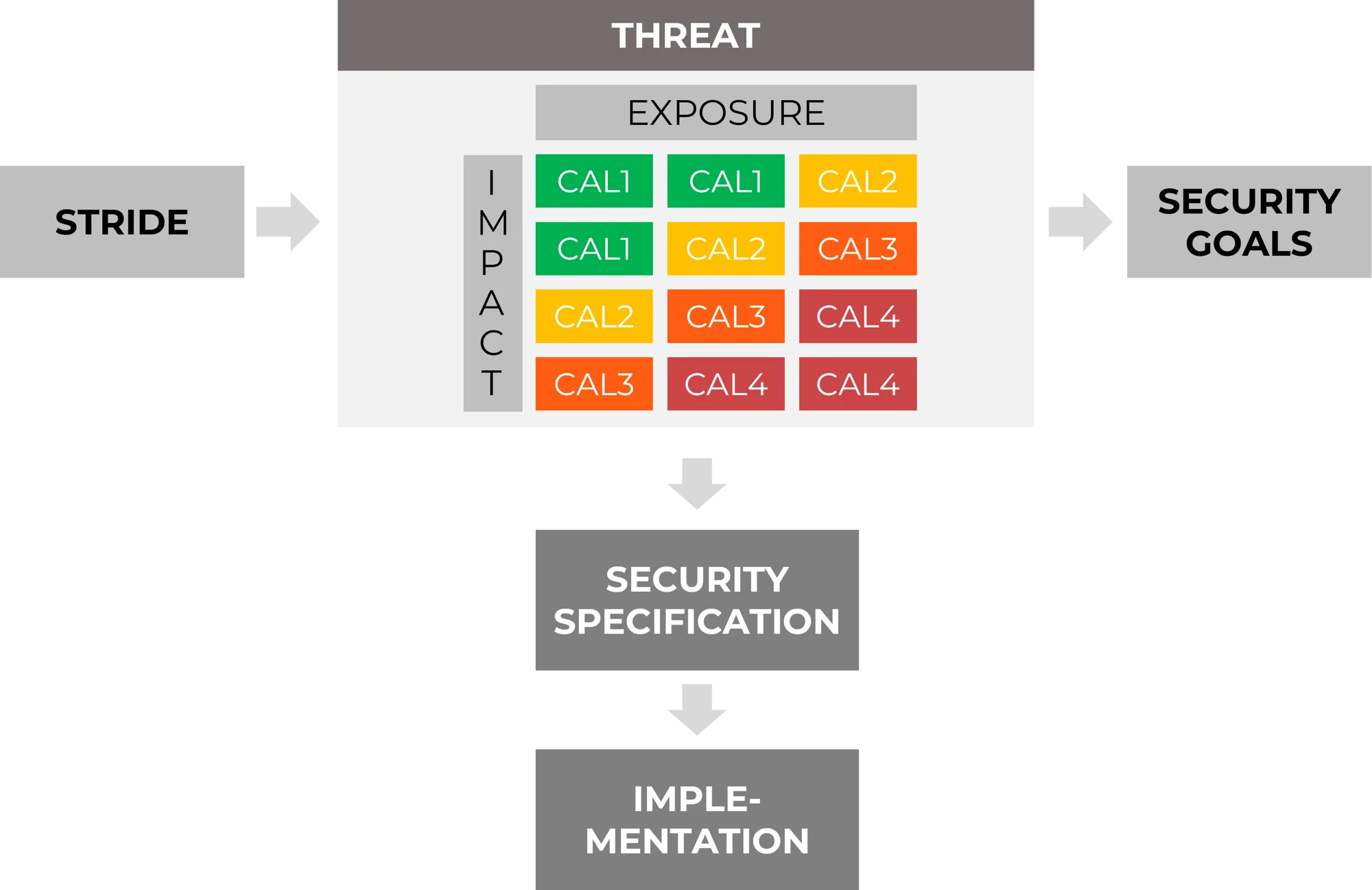
TARA as a Foundation for Embedded Cybersecurity
Cybersecurity is becoming a central component of product development for many embedded systems. Communication interfaces, update mechanisms, external peripherals, or cloud connections create additional attack surfaces that must be considered in the device's architecture from the outset. PICKPLACE supports manufacturers in integrating cybersecurity into electronics and software development in a structured manner. The starting point is typically a Threat and Risk Assessment, in which potential attack scenarios are systematically identified and evaluated. This analysis forms the basis for which technical cybersecurity measures are required in hardware, firmware, and system architecture, and how they are specifically implemented.
Vulnerability analysis
Identification and assessment of potential security vulnerabilities in software and hardware.
Threat and Risk Assessment
Systematic analysis of possible threat scenarios and risk assessments to develop targeted countermeasures.
Authentication and Authorization
Verification of all access to ensure only authorized users or systems have access.
Secure Updates
Ensuring that only authorized and verified software updates reach the devices.
Encrypted communication
Protection of data transmission through proven encryption methods.
Key Management
Secure management of cryptographic keys and secrets throughout the entire product lifecycle.