Hardware Developer Hamburg
Hamburg is one of Germany's most important economic centers. However, in the high-tech context, the city plays a somewhat more specialized role. While regions like Munich, Stuttgart, or Dresden are strongly characterized by the semiconductor industry, automotive technology, or major electronics corporations, Hamburg has developed primarily through logistics, port economy, and a growing digital economy in recent decades.
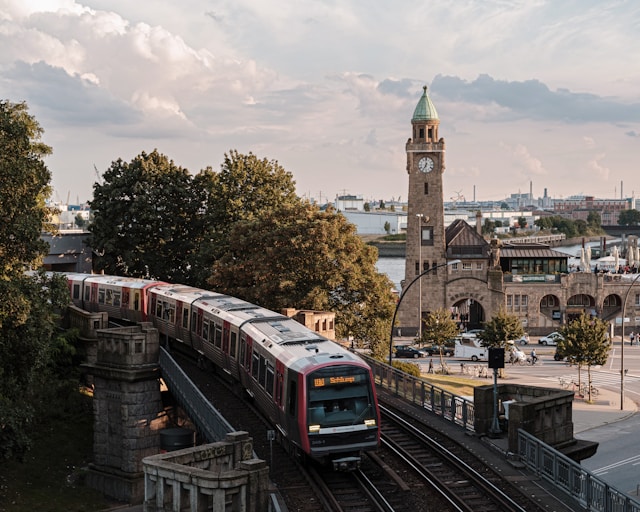

Hardware from the Hanseatic City
In Hamburg, specialized electronic systems are being developed in many niches – for example, in measurement technology, aviation, maritime technology, industrial electronics, or safety-related systems. These products are often based on individually developed printed circuit boards (PCBand Embedded Hardware.
PICKPLACE - Hardware Developer Hamburg - takes care of such electronic platforms for industrial applications.
Our office is located in the western part of Hamburg in Osdorf am Born, just a few minutes from Blankenese. The location is exemplary for Hamburg: a mix of international trade location, down-to-earth industry, and specialized technology companies.
Technology and Industrial Location Hamburg
From Osdorf by the Spring Many technology and industrial sites in Hamburg are quickly accessible from here, as are companies in neighboring Schleswig-Holstein. Many of our projects are created in close coordination with our clients' development teams.
Hamburg combines several characteristics that also shape our work:
- International flair through the harbor and global economy
- Hanseatic down-to-earthness
- a strong industrial and technological base

Hardware Development vs. EMS Provider
Many companies work with EMS providers (Electronics Manufacturing Services). These companies specialize in the production of electronic assemblies.
However, the actual hardware development—system architecture, circuit design, and PCB layout—is a different discipline.
A development service provider focuses more on:
Hardware development and EMS in Hamburg
EMS partner in the Hamburg area
In the greater Hamburg metropolitan area, there are several established EMS companies that manufacture and assemble electronic components. These include, among others:
These companies typically handle the production and assembly of printed circuit boards once hardware development and PCB design are complete.

Requirements and Job Profile
In modern companies, a hardware developer plays a central role in the creation of electronic products, assemblies, and embedded systems. Today, this role goes far beyond drawing circuit diagrams. Companies are looking for engineers who combine technical depth with systemic thinking and can guide products from the initial idea to series production. Anyone looking to hire a hardware developer or use them as a service provider should therefore consider the actual requirements realistically.
The core technical tasks initially include the conception of electronic systems. A hardware developer must understand requirements, evaluate technical constraints, and derive viable architectures from them. This includes, for example, power supply, signal routing, processor selection, memory interfacing, interface concepts, and safety margins. In many projects, a decision must be made at an early stage about which platform is available long-term, economically sensible, and technically robust.
Another key area is circuit development. This includes the creation of schematics for analog, digital, or mixed-signal systems. Not only CAD experience is expected, but also a solid understanding of components, tolerances, derating, protection concepts, filters, driver stages, and power supplies. Errors in this phase cause high costs later on, which is why precise work and experience are crucial.
Related to this is the topic of PCB layout and Design for Manufacturing. Even though layouts are sometimes created by specialized layout designers, a good hardware developer must understand printed circuit boards: layer stack-up, return paths, EMC-compliant placement, impedance control, thermal aspects, clearances, manufacturing tolerances, and testability. This knowledge is absolutely essential, especially for high-speed interfaces, power electronics, or compact assemblies.
In professional practice, a high degree of component and procurement understanding is also expected. A hardware developer must select available components, evaluate second sources, and mitigate risks through Obsolescence Recognize. Supply chain issues, discontinued components, or geopolitical uncertainties directly impact many projects today. Therefore, technical selection decisions often have strategic implications.
Equally important is the ability to commission and troubleshoot. After the first prototype, the real test often begins. Hardware developers then work with oscilloscopes, logic analyzers, spectrum analyzers, multimeters, or climate chambers. Systematic troubleshooting is expected for problems such as boot errors, instabilities, signal interference, timing issues, or temperature behavior. This shows whether someone just develops or truly understands systems.
In almost all companies, collaborating with embedded software teams is also part of everyday life. Hardware is rarely developed in isolation these days. Microcontrollers, FPGA, Linux platforms or sensor technology require close coordination with firmware and software developers. Register definitions, pin muxing, debug interfaces, driver requirements, or memory architectures must be considered jointly. A good hardware developer therefore communicates across disciplines.
In addition, there are requirements in the areas of quality, standards, and documentation. Many industries expect traceable development statuses, change management, bill of materials maintenance, test reports, and design reviews. In regulated sectors, functional safety, cybersecurity, environmental requirements, or industry-specific standards are added. Developers must therefore be able to document their technical work cleanly and prepare it for auditing.
What awaits them simultaneously in their career is often a tension between innovation, time pressure, and responsibility. Development times are getting shorter, products are becoming more complex, and budgets are tighter. At the same time, designs need to be robust, cost-effective, and maintainable in the long term. A hardware developer must therefore set priorities, make pragmatic decisions, and be able to deal with uncertainty.
The issue of responsibility for error costs is also real. A software error can often be corrected with an update. A hardware error can mean re-design, new tools, recalls, or months of delay. Therefore, hardware developers are expected to have a high standard of care and risk awareness.
Additionally, the job profile is constantly changing. Today, knowledge of high-speed interfaces, security chips, power management, wireless communication, edge AI hardware, or energy-efficient designs is in demand. Those who want to be successful in the long term must continuously develop themselves.
In summary, a hardware developer needs a technical foundation, analytical thinking, interdisciplinary communication skills, and resilience. At the same time, they can expect a profession with high relevance, visible results, and a direct impact on real products. Good hardware developers are therefore not just pure CAD users – they are technical system designers responsible for the overall outcome.
Services
Hardware Development
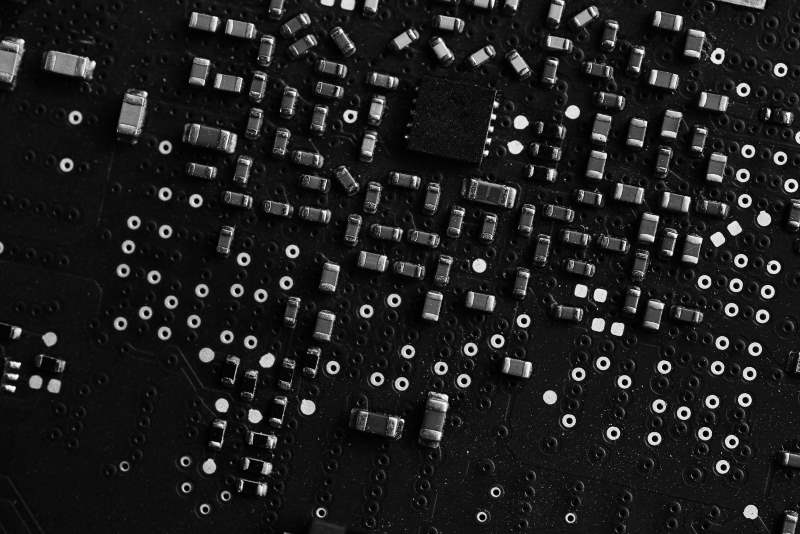
Hardware forms the foundation of every embedded system. From the initial idea to the finished circuit board, we develop custom electronics for control units, sensors, board computers, and edge systems – structured, traceable, and application-oriented.
PICKPLACE is looking for hardware developers
As a Hardware Developer, you will work with us on real electronic products, embedded systems, and sophisticated technical solutions. Hamburg offers one of the most exciting industrial environments in Germany with companies from aviation, logistics, medical technology, defense, and mechanical engineering. At PICKPLACE, you can expect an environment where technical competence counts, not internal bureaucracy.
As a hardware developer, you design circuits, oversee prototypes, analyze failure patterns, and collaborate closely with embedded software teams. Hamburg is a location with high demand for engineers who bring practical experience in electronics, microcontrollers, interfaces, and series products. Those who truly understand technology will find diverse opportunities here.
We are looking for analytical thinkers with an interest in electronics and a passion for creating functional systems as Hardware Developers. Hamburg needs developers who take responsibility, work meticulously, and can find pragmatic solutions even under pressure. Not every tool needs to be mastered perfectly – the ability to solve problems in a structured way is more important.
At PICKPLACE, you'll work on projects with substance, not endless coordination loops, as a Hardware Developer. In Hamburg, this means short distances, direct exchange with experienced colleagues, and technical tasks where you create tangible results. You'll be involved in the entire development process, from the initial idea to the finished hardware. If you're seeking a new challenge and want to apply your experience meaningfully, we look forward to receiving your application as a Hardware Developer. Hamburg is a strong technology hub – and PICKPLACE is the right place for developers who want to make an impact.