Industrial Control Systems
Industrial control systems combine electronics, software, and field interfaces to control, monitor, and regulate machines, plants, and production processes. PICKPLACE works in this field on custom control systems, industrial electronics below or alongside PLC solutions, and...
Content
The most important information in brief
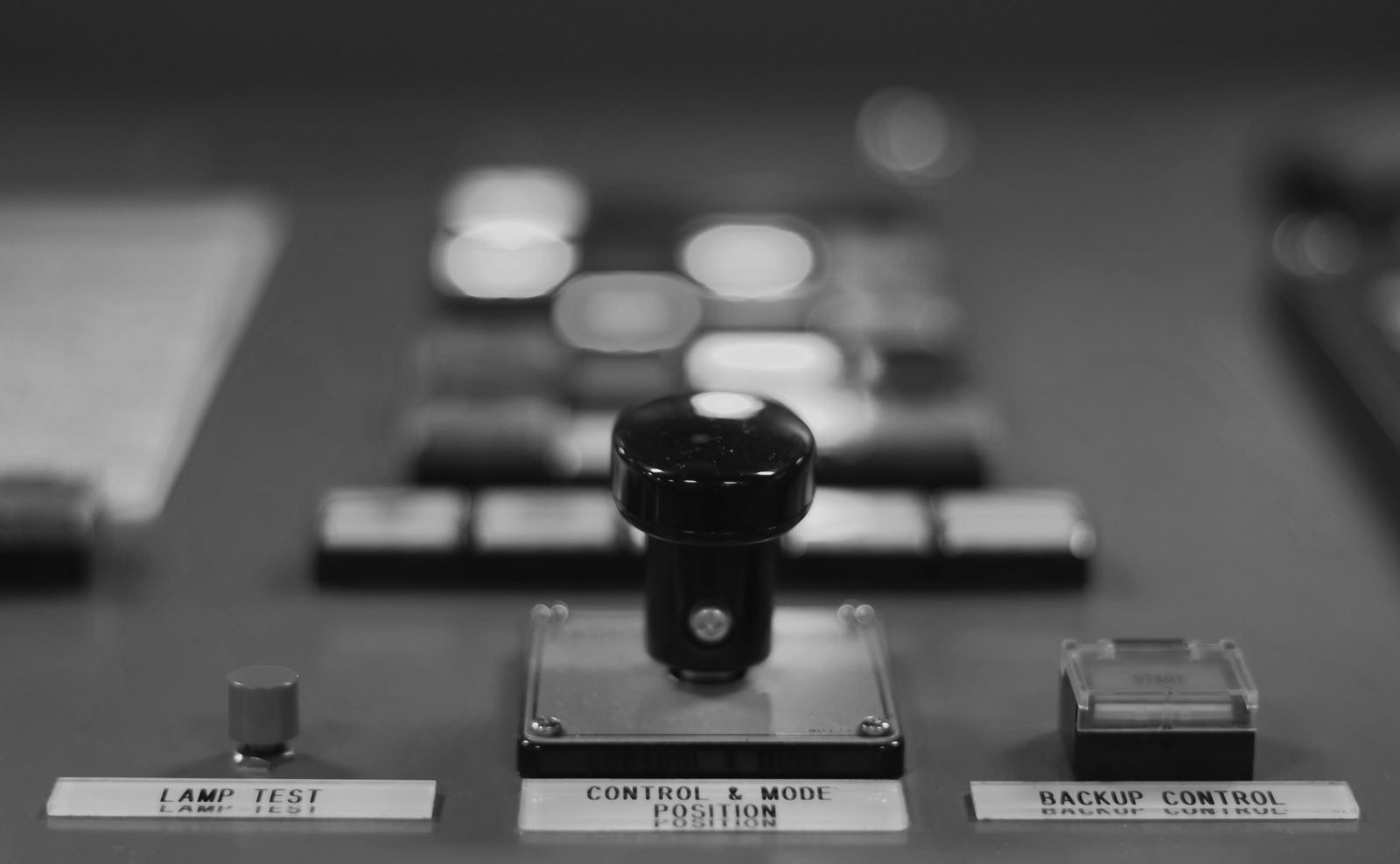
Industrial controls are used for automating and managing industrial processes and machinery.
Industrial controls are used when machines or systems must perform defined processes, record process states, and react to them with electrical or mechanical actions. They form the connection between sensors, actuators, operator interfaces, power components, and higher-level systems. In practice, an industrial control can regulate a heater, control a drive, switch relays, control solid-state switches, or evaluate sensor data.
A typical control sequence follows the principle of input, processing, and output. On the input side are sensor signals, digital states, analog measured values, fieldbus data, or operator commands. In processing, this information is evaluated by software logic, microcontrollers, PLC programs, or embedded control functions. On the output side, switching signals, manipulated variables, enabling signals, error states, or communication data for other systems are generated.
PICKPLACE therefore views industrial controls not just as individual circuit boards or software components, but as part of an overall technical system. In a project, it is clarified which signals are present, which loads are switched, what reaction times are required, and which operating states must be considered. This also includes edge cases such as power-on sequences, voltage drops, faulty sensor values, load peaks, or incomplete communication data.
Industrial controls can be implemented as off-the-shelf PLC systems. This approach is sensible in many plants when requirements can be met with available modules, existing fieldbuses, and standardized automation functions. In addition, there are many applications that require custom embedded controls. This applies to systems with special form factors, unique interfaces, defined cost frameworks, integrated power electronics, or tight coupling to a specific machine.
In individual controls, fieldbus interfaces are often located externally, while the internal architecture is handled by one or more modules. One module can accommodate the logic, another the power outputs, and a third the sensor connection or supply. This creates clear technical interfaces within the device. PICKPLACE supports defining this division, describing signal flows, and preparing the implementation so that hardware, firmware, and commissioning align.
What are the special features of industrial controls?
Industrial control systems differ from many other electronic systems due to their operating environment, electrical interfaces, and integration into ongoing processes. They often operate with 12V, 24V, or 48V levels, switch inductive or resistive loads, sense signals from a noisy environment, and must handle supply voltages that are not always clean or constant.
The 24V DC level is widespread in many industrial applications. It is used for sensors, digital inputs, switching outputs, relays, valves, or smaller actuators. 48V architectures are used when higher power or specific drive concepts need to be considered. 12V power supplies are found in sub-areas, auxiliary circuits, or specific devices. For development, this means that logic voltage, field voltage, and power sections must be considered separately.
A key feature is the separation between the control logic and the load side. Microcontrollers, memory, communication modules, and digital logic operate at low voltages and with sensitive signals. Relays, solid-state switches, sensor lines, and actuator outputs, on the other hand, are connected more directly to the system. These areas must be appropriately separated from one another electrically, thermally, and functionally. PICKPLACE takes into account, among other things, protective circuits, input circuits, driver stages, grounding concepts, and the handling of interference pulses.
Communication also shapes the architecture of industrial control systems. Externally, fieldbuses, digital interfaces, or plant-specific protocols may be required. Internally, communication between multiple cards can occur via connectors, serial buses, or defined signal lines. Each interface must be described in such a way that the data direction, signal levels, timing, error conditions, and startup behavior are understandable.
Another point is the proximity to industrial electronics. In this context, it's not just about software functions, but also about PCB layout, component selection, power supply concept, thermal conditions, switching behavior, and mechanical integration. A controller can be programmed functionally correctly and still cause problems in the target system if the power supply, EMC behavior, loads, or wiring are not suitable for the application. That's why at PICKPLACE, hardware and software are considered together.
Industrial control systems must also have traceable states. For commissioning and subsequent troubleshooting, a system requires defined initial states, error messages, diagnostic information, and clear responses to invalid inputs. This may include status LEDs, debug interfaces, communication messages, log data, or measurable signals on the circuit board. The diagnostic level required depends on the device, the installation location, and maintainability in the field.
What should be considered when developing industrial controls?
The development of an industrial control system begins with the system architecture. First, it is determined which functions the control system is to perform, which signals are input and output, which voltages are available, and which loads are to be switched or controlled. This results in a division into inputs, processing, outputs, communication, power supply, and protection functions.
When designing a custom embedded control system, it is important to decide early on which tasks will be handled by hardware, firmware, or a higher-level controller. A simple switching function can be implemented directly in hardware, while sequence control, diagnostic functions, or communication logic are implemented in software. If a PLC is part of the system, it must be determined which functions remain in the PLC and which are performed by additional industrial electronics.
Power supply design is a distinct area of development. Industrial voltages can be affected by long cables, switching operations, motors, relays, or other loads. Therefore, consideration is given not only to the nominal voltage, but also to inrush behavior, undervoltage, overvoltage, reverse polarity, voltage sags, and transient disturbances. The power supply design, filtering, protective circuitry, and grounding must be appropriate for the application.
EMC requirements affect PCB layout, connectors, enclosure connections, filters, shielding concepts, and signal routing. Particularly in the case of sensor cables and power outputs, the interplay of cable length, load type, and transition edges can lead to malfunctions. PICKPLACE takes these dependencies into account as early as the architecture and layout phases to ensure that subsequent measurements and commissioning are not hampered by fundamental structural issues.
The choice between relay and solid-state technology also depends on the project. Relays provide galvanic isolation and are suitable for certain load conditions, but they have specific mechanical characteristics, switching cycles, and contact behavior. Solid-state switches operate without mechanical contacts, but require consideration of power dissipation, leakage currents, protective functions, and thermal behavior. The decision depends on the type of load, switching frequency, environment, diagnostic requirements, and space available in the device.
For sensor interfaces, it is determined whether digital signals, analog values, current loops, temperature-dependent measured variables, or specific protocols are present. Input circuits must map signal ranges, limit interference, and make error conditions detectable. To this end, the software defines plausibility checks, threshold values, debouncing, filtering, and error messages.
Before commissioning in the target system, it is helpful to perform tests using simulated data. PICKPLACE can verify control functions using open test sequences in which inputs are specified and outputs are evaluated. In closed-loop tests, behavior is analyzed using feedback—for example, when an output influences a simulated path, resulting in new input values. This allows for the verification of logic errors, edge cases, and state transitions before the controller operates on the actual machine.
Further professional classification
Multi-level architecture of logic and field level
Many industrial control systems consist of multiple levels. The logic level processes states, executes programs, and communicates with other systems. Below this is the field level with 24V or 48V signals, power outputs, relays, solid-state switches, and sensor connections. Between these levels are drivers, protection circuits, level adjustments, or galvanic isolation.
This separation aids in project structure. Hardware development, firmware development, and commissioning can refer to defined interfaces. At the same time, the layers must be designed together because a software function only works correctly if the output stage, power supply, and connected load are compatible.
Internal maps and external fieldbus interfaces
In more complex systems, the control unit may consist of several modules. One internal card handles the computing functions, another manages the power supply, and additional cards handle the inputs and outputs. Fieldbus interfaces, sensor connectors, actuator connections, and operator interfaces are routed to the outside.
Such a system requires an internal interface specification. It defines which signals are transmitted between the cards, the startup sequences, which error conditions are reported, and how the modules can be tested. Without this specification, problems often arise during integration because the hardware, software, and cabling are based on different assumptions.
Typical techniques and building blocks
- Industrial MPU TI AM243x
- Industrial Ethernet Hilscher netX 90
- RTOS FreeRTOS
- PROFINET Stack
- Embedded Linux Yocto Project
Our Services
PICKPLACE supports projects related to industrial control systems, from architecture through to commissioning in the target system. The focus is on the interaction between hardware, software, and practical testing in the application.
We develop and evaluate hardware for custom industrial electronics, such as input and output stages, power supply designs, relay and solid-state circuits, sensor interfaces, and multi-level architectures with logic and field levels. This includes defining voltage ranges, load profiles, protection functions, connectors, and internal board interfaces.
On the software side, PICKPLACE is working on control logic, firmware functions, state machines, diagnostic functions, and communication processes. This involves defining the system’s possible states, how errors are detected, and which outputs are permitted in each operating state.
During commissioning, we test the system’s behavior in the target system and with simulated data. Open-loop tests are used to specify inputs and measure outputs. Closed-loop tests simulate feedback loops and demonstrate how the control system behaves in dynamic processes. In addition, functional isolation can be performed to test subfunctions separately and isolate sources of error among hardware, software, power supplies, sensors, and actuators.
PICKPLACE thus takes on tasks in analysis, concept, development, testing, and handover. The goal is a traceable technical foundation on which an industrial control system can be built, expanded, or integrated into a machine.