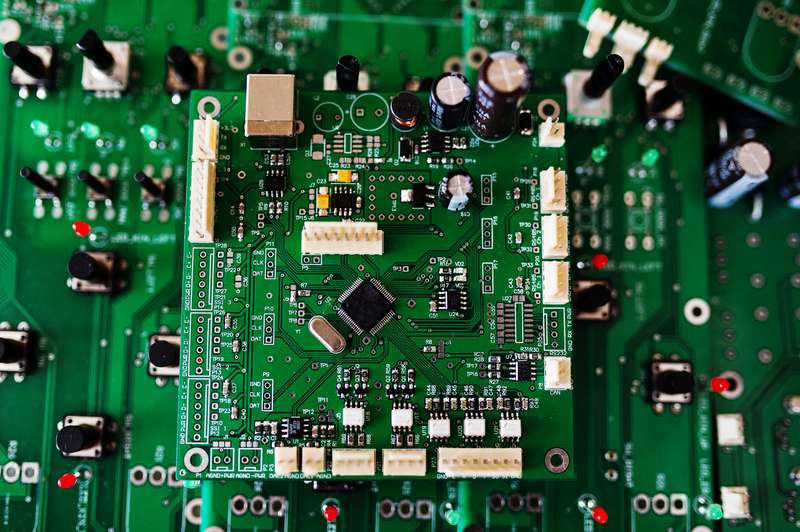
A printed circuit board (PCB), also known as a circuit board, is the mechanical and electrical support structure for electronic circuits. Electronic components such as integrated circuits, resistors, capacitors, or connectors are mounted on it and interconnected via conductive structures.
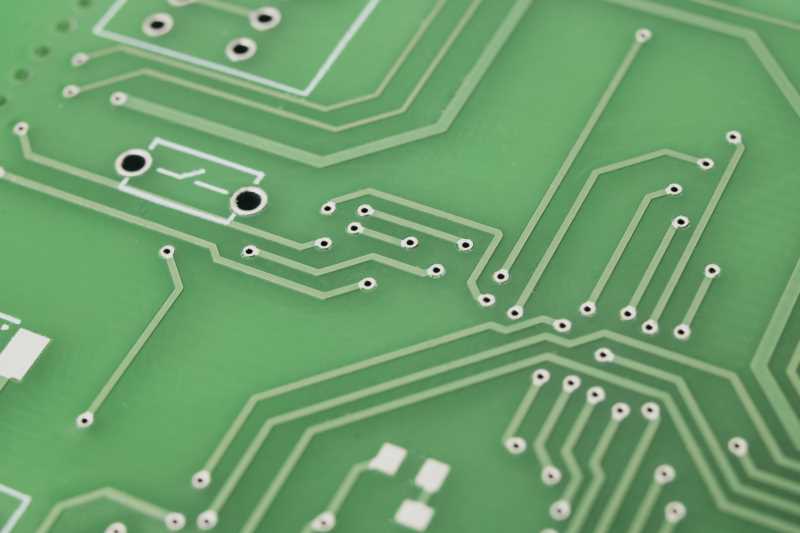
Printed circuit boards consist of an electrically insulating base material with conductive structures applied to it, known as traces. In electronics development, glass fiber-reinforced epoxy resin is most commonly used as the base material (often referred to as FR-4). For simple or cost-sensitive applications, materials such as paper-based laminates are also used. The conductive structures are typically made of a thin copper layer that is structured through an etching process. A typical copper thickness is, for example, around 35 µm, although other thicknesses are also used depending on the application.
Electronic components are attached and electrically contacted to the printed circuit board via solder pads or solder eyelets. These contact points are part of the so-called footprint, which defines the mechanical position and electrical connections of a component. The soldering process simultaneously creates the electrical connection to the trace and the mechanical fixation of the component on the printed circuit board.
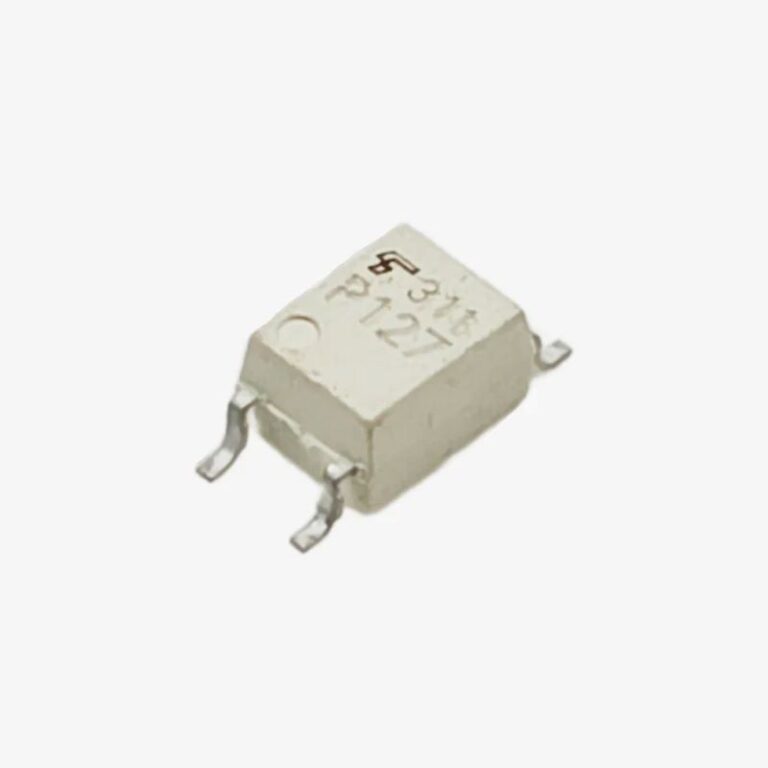
Depending on the design of the components, a distinction is made between Through-Hole Technology (THT), where leads are guided through drilled holes and soldered, and Surface-Mount Technology (SMT), where components are mounted directly on the surface of the printed circuit board. Modern electronics predominantly use SMT components, as they allow for more compact designs and automated assembly processes.
In addition to the electrical connection, the printed circuit board also performs mechanical and thermal functions. It carries the components of a system, enables defined signal routing, and influences properties such as signal integrity, electromagnetic compatibility (EMV), and heat dissipation. Larger or mechanically stressed components can also be secured to the printed circuit board using screws, adhesives, or other mechanical fasteners.
Modern circuit boards often consist of multiple layers (Multilayer PCBs), in which signal lines, ground planes, and supply voltages are arranged in a structured manner. Connection between the individual copper layers is made via vias, which are metallized through-holes within the printed circuit board. This allows complex electronic systems with high component density and many signals to be realized in a compact space.