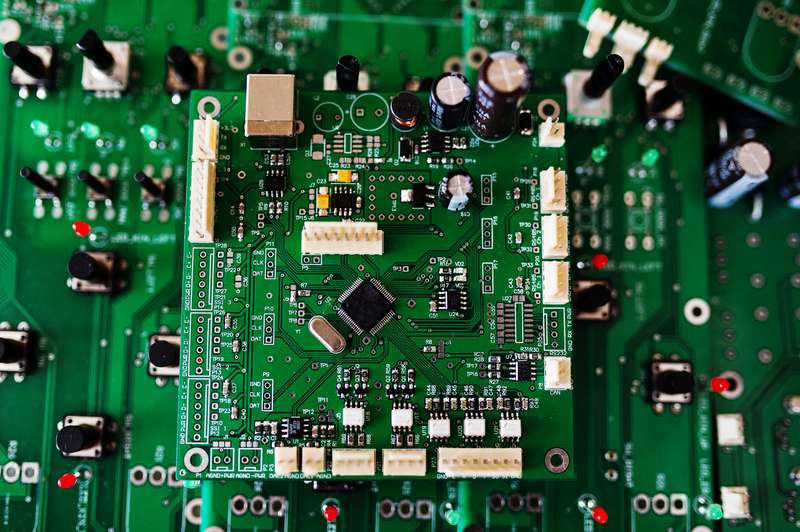
Embedded software refers to programs specifically developed for a particular electronic device or technical system, where they are permanently integrated with the hardware. It is a component of what is known as an embedded system and is responsible for controlling, monitoring, and coordinating the functions of a device or machine. The term firmware is also frequently used in this context.
Unlike general-purpose application software on PCs or servers, embedded software is always product-specific. It is developed for a concrete hardware platform and is tailored to its resources, interfaces, and tasks. The software ensures that a device's sensors, actuators, communication interfaces, and internal functions work together according to the intended logic.
Typically, embedded software consists of several functional components. This often includes a Bootloader, which takes over the system's startup process and enables software updates. Above this is optionally an operating system or a real-time operating system (RTOS), which provides tasks such as memory management, task scheduling, and device management. The application software finally implements the actual product functions, processes data from sensors, and controls actuators or communication interfaces.
An essential characteristic of embedded software is its close coupling with hardware. Resources such as memory, processing power, and energy are often limited, which necessitates tailoring software architecture and implementation to these constraints. Simultaneously, requirements for real-time behavior, reliability, and deterministic system responses are frequently present.
Embedded software is used in numerous technical products, for example in industrial controls, measuring instruments, household appliances, vehicle control units, or IoT devices. In many of these systems, it forms the fundamental functional logic that makes the electronic device operational in the first place.

Typical Embedded Software Architecture
Specifically, the architecture of embedded software is characterized by its tight coupling to the underlying hardware. It is often structured in several layers, such as a bootloader, hardware abstraction layer (HAL) or operating system, and the overlying application software. This structure separates hardware access from application logic and enables controlled system management as well as better maintainability and portability of the software.