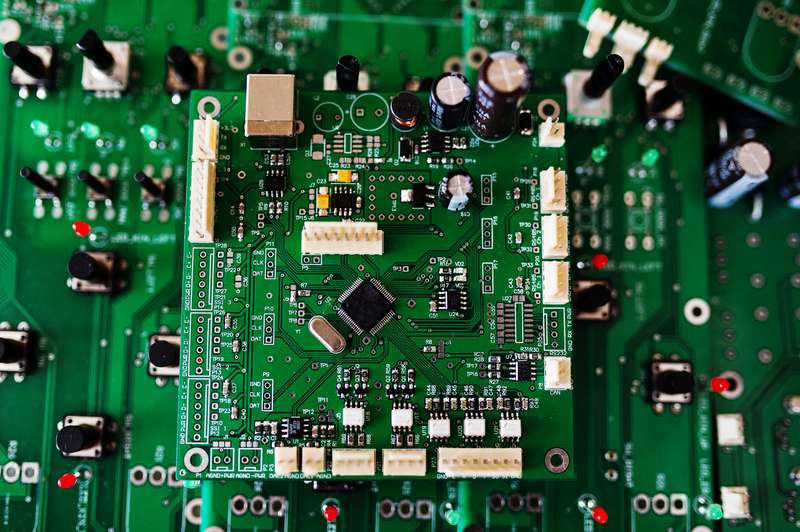
A circuit diagram – often also known as Schematics designates – is the graphical representation of an electronic circuit. It depicts electronic components such as integrated circuits, resistors, capacitors, or connectors as standardized symbols and links them together via electrical connections.
The circuit diagram describes the logical and electrical structure a circuit, not its physical arrangement on the printed circuit board. It shows which signals are connected to each other, which supply voltages are used, and how individual functional blocks interact with each other. The schematic thus forms the basis for the later printed circuit board layout.
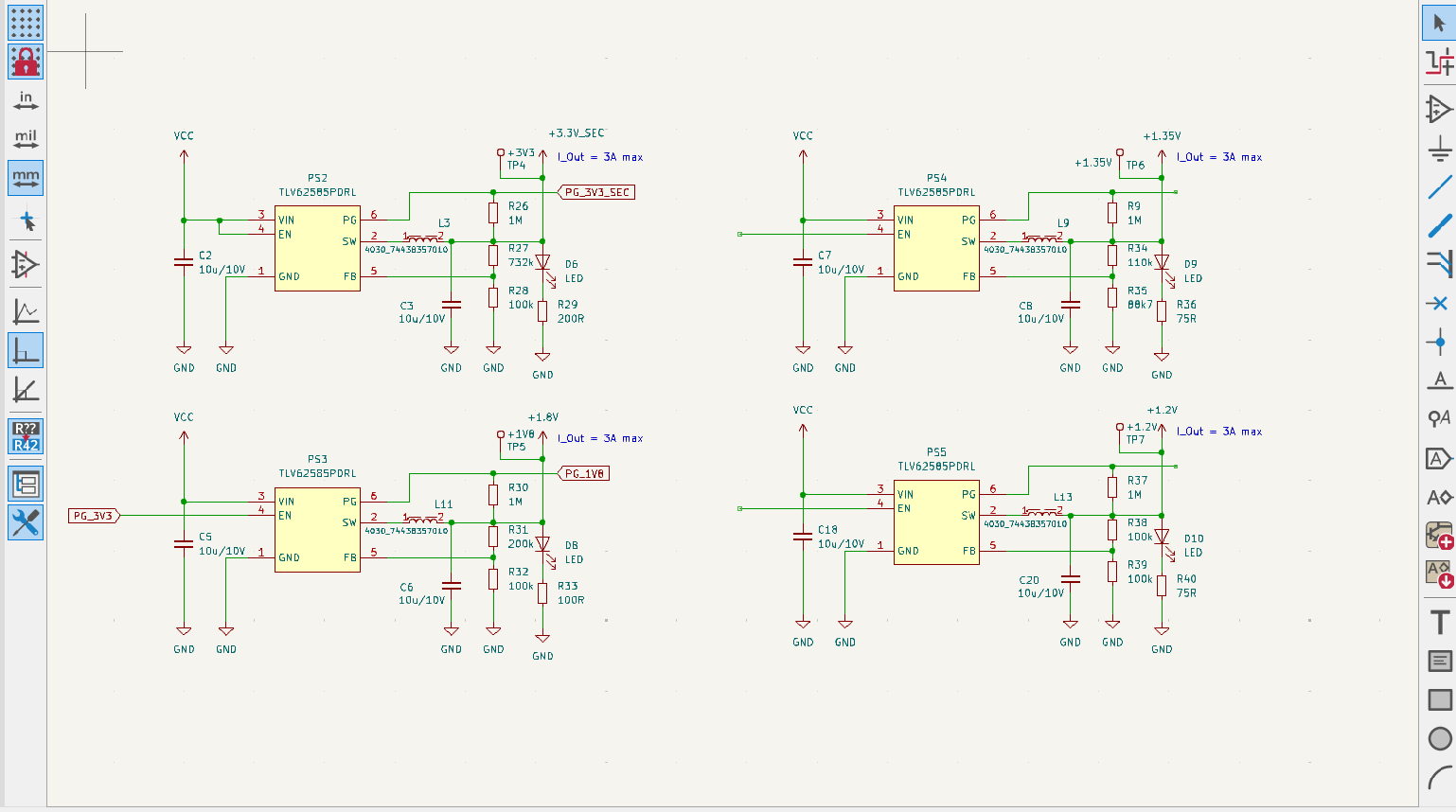
In modern electronic development tools, components are inserted into schematics from libraries. Each component has a Switch symbol, electrical pins, and connections to a footprint for the printed circuit board. During development, nets are defined, components are connected, and supply signals or bus systems are structured.
The schematic also serves as the central technical documentation for an electronic system. It can be used to derive parts lists (BoM), electrical connections, and design rules. Based on the schematic, the PCB Layout created, where the components are physically placed and the traces are routed.