One Distributed Denial of Service (DDoS) is an attack in which a system is deliberately overloaded by a large number of requests or messages. The goal is to impair or completely prevent the availability of a service or system. While DDoS attacks are often discussed in the context of internet services, they also play a role in Embedded Systems and industrial controls play an important role.
Principle of Operation of a DDoS Attack
In a classic DDoS attack, many compromised systems – often part of a so-called botnet – simultaneously send requests to a target system. This overloads the system's network bandwidth, processor performance, or internal resources.
In embedded systems, such an attack could lead to, for example:
- Communication interfaces blocked
- Control commands can no longer be processed
- Real-time functions are disturbed
The consequence is often limited or completely interrupted system function.
DDoS attacks on bus systems in embedded systems
Particularly critical are DDoS-like attacks on Bus systems, which are used for communication between components of a system. In many embedded architectures, there is only a single common communication medium through which all participants exchange data.
Typical bus systems include, for example:
- Controller Area Network
- Ethernet-based fieldbuses
- SPI or I²C in local system architectures
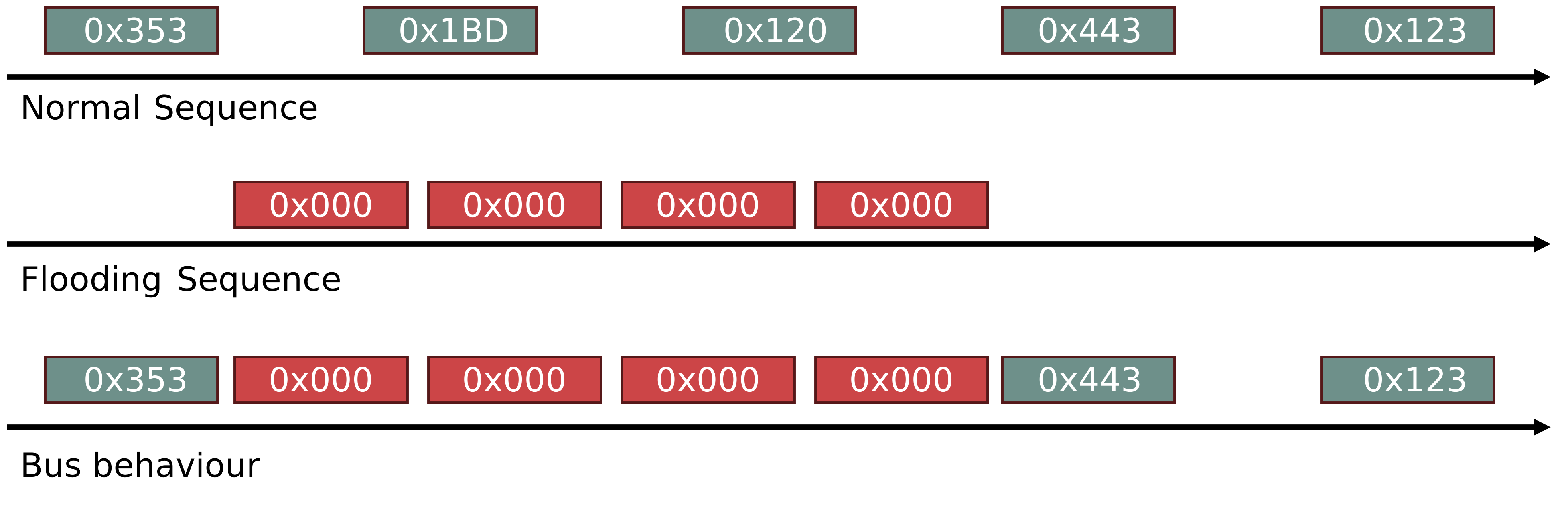
A participant who permanently clutters the bus with messages or sends them at a high frequency can effectively block other participants. In the case of a CAN bus for example, a high-priority node can continuously send messages, preventing other control units from transmitting their messages.
Impact on Embedded Systems
The consequences of such an attack can be significant depending on the application. In security-critical systems – such as industrial plants, vehicles, or military applications – blocked communication can have direct impacts on system function.
Possible consequences include:
- Loss of tax exemption
- Delayed or missing sensor data
- Failure of safety functions
- System restarts or watchdog resets
Since embedded systems often operate in real-time, even a short communication blockage can cause critical states.
Protective measures
Various measures are used to protect embedded systems against DDoS-like attacks. These include, for example:
- Traffic monitoring and rate limiting
- Priority Management in Bus Systems
- Network Segmentation
- Authentication and integrity protection of messages
- Watchdog mechanisms and fail-safe strategies
Securing the communication infrastructure is becoming increasingly important, especially in security-critical applications.
Significance for embedded development
DDoS attacks show that Availability is a central security requirement in embedded systems. In addition to classic security aspects such as authentication or encryption, resilience against communication overload must therefore also be considered.
For developers, this means already in System Design and Architecture Mechanisms must be provided that can detect and limit overload. This is a particularly important component of a robust embedded security strategy, especially for systems with shared bus systems.