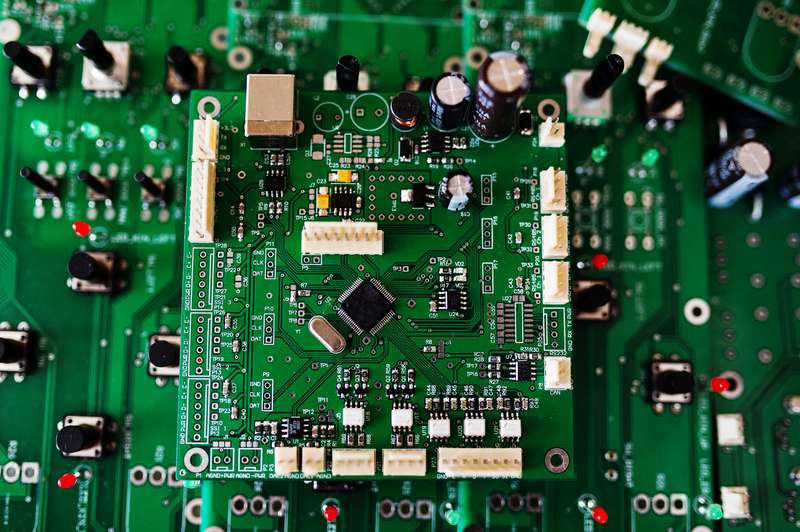
A daughterboard (also called a daughtercard, mezzanine board, or piggyback board) is an expansion board that connects directly to a motherboard or another system board. Related terms include daughtercard, mezzanine board, and piggyback board. A daughterboard expands existing electronics with additional connections, memory, interfaces, or device features. The term "mezzanine board" is more common in FPGA-based systems.
Content
What is a daughterboard?
A daughterboard is not a standalone mainboard. It connects to an existing system and utilizes its electrical and mechanical connection points. The connection is made via plugs, sockets, pins, or other board-to-board connectors.
Daughterboards are typically located inside a computer or electronic device. They often access the motherboard directly, rather than being connected via an external or general computer bus. This distinguishes them from many traditional expansion cards, which are operated through standardized bus slots.
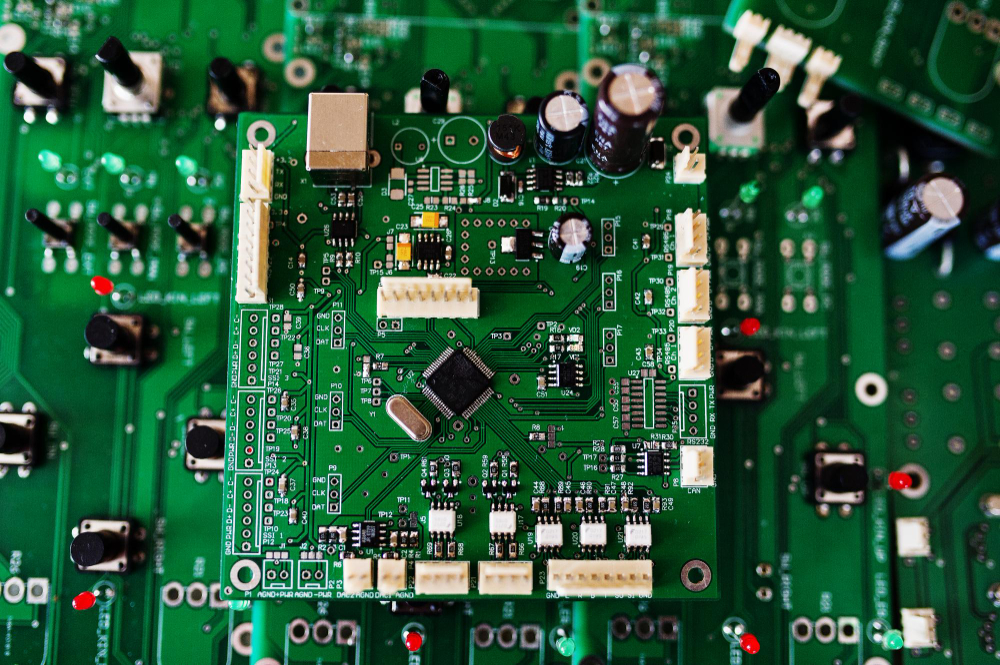
A daughterboard is mechanically mounted on or next to a main board. In the case of mezzanine boards, the expansion board is usually located above the main board and parallel to it. Standoffs or spacers mechanically separate the two boards. This design saves space within the enclosure but requires additional height.
A daughterboard can also be designed as a riser card. Riser cards allow expansion cards to be installed parallel to the motherboard. This is used when a chassis cannot accommodate vertical cards or requires a flat design.
The electrical functionality depends on the specific board. A memory expansion can provide additional storage capacity. A RAID daughterboard can expand memory controller functions. Other variants offer radio modules, modem functions, AD/DA/DIO interfaces, or serial ports.
A daughterboard is used in a computer system to expand or add functionality to a motherboard.
Daughterboards are found in computers, servers, embedded systems, and electronic devices. They are used when a mainboard needs to be augmented with a specific function without redesigning the entire mainboard.
One application area is the product variant of a device. A manufacturer can equip a basic model with a special connector on the main board and supplement certain functions via a daughter board. This allows a different model with additional features to be created from the same basic platform.
Single-board computers also use this form factor. With Arduino, extensions are called shields. With Beaglebone, they are called capes. On the Raspberry Pi, corresponding extensions are called HAT add-on boards. An example is a Raspberry Pi 4B with TV Hat for DVB-T/T2 Reception.
Important Properties
A daughterboard is attached to an existing system board. It only fulfills its function together with the board for which it is electrically and mechanically designed.
The connection can be proprietary or standardized. For mezzanine cards, several interface standards exist, including FPGA Mezzanine Cards, High-Speed Mezzanine Cards, PCI Mezzanine Cards, XMC mezzanines, Advanced Mezzanine Cards, and IndustryPacks. Such standards define connection form, signals, and mechanical constraints.
The form factor can react to the housing geometry. A parallel-mounted card reduces the required footprint but increases the space needed in height. A riser card changes the orientation of an expansion card without fundamentally altering its function.
A daughterboard can provide internal connections. Therefore, it does not necessarily have to have external ports on the outside of the case. Some daughterboards only connect internal components or signals.
Synonyms and related terms
An expansion card is a general term for expansion boards. A classic expansion card is often inserted into a bus slot, for example in a PC system. A daughterboard is also an expansion board, but is often connected more directly to a specific motherboard.
A mezzanine board is a form factor of a daughterboard. It is mounted above another board and is usually parallel to it. The term refers to the stacked arrangement.
A piggyback board also refers to a mounted board. The term emphasizes the mechanical position on another board more strongly.
A riser card primarily serves to change the installation orientation of a card. It can be considered a daughterboard itself if it connects directly to the mainboard.
A motherboard is the main circuit board of a system. It carries the basic functions and connects the components. A daughterboard expands this platform but does not replace it.