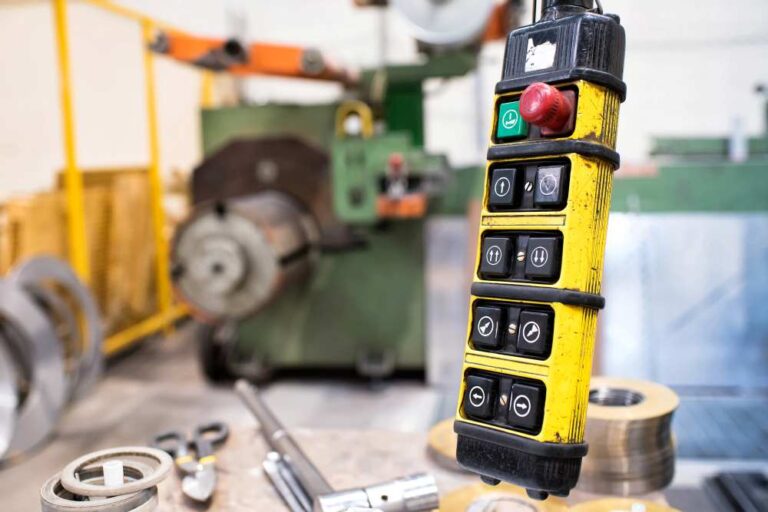
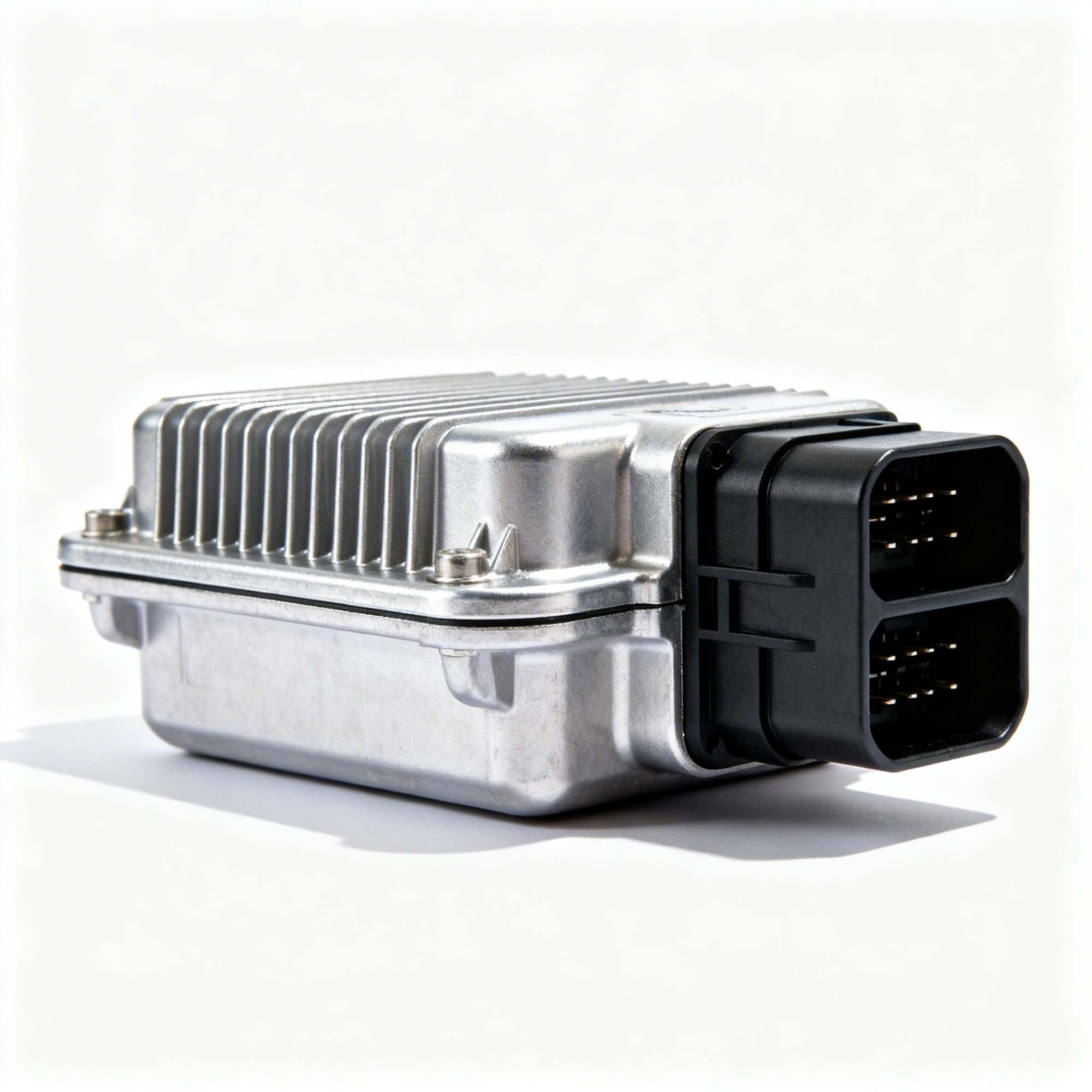
A control unit is an electronic unit that connects sensors, actuators, and communication interfaces, and executes the control logic of a technical system. It typically consists of a Microcontroller or processor, Embedded Software as well as the necessary inputs and outputs for connecting sensors and actuators.
In principle, control units work according to the Input-Process-Output Principle. Sensors detect physical quantities such as temperature, pressure, position, or rotational speed and provide them as input data. The software in the control unit processes this information based on stored algorithms, parameters, or models. Subsequently, control commands are output via actuators or interfaces, which directly intervene in the physical process.
Modern control units are mostly self-contained computer systems with microcontrollers or processors, memory, peripherals, and communication interfaces. The complexity ranges from simple microcontroller solutions to powerful multiprocessor systems. The software is typically stored in flash memory and can be updated via service or update interfaces.
In many system architectures, multiple control units work together and are connected via serial bus systems interconnected. Communication protocols are used to exchange states, sensor data, or control commands between different system components. This allows complex functions to be distributed across multiple specialized control units.
Control units are used in many technical fields, such as in machines, industrial plants, measurement systems, or vehicles. Especially in vehicle architectures, large networks of control units often exist, which perform different functions within the overall system and are connected to each other via communication buses.