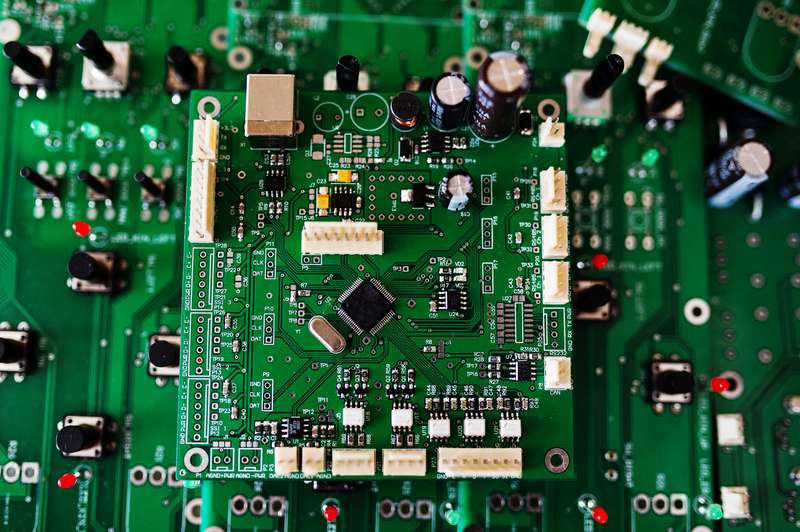
The ESP32 is one of the most well-known and widely used microcontroller platforms in the area of connected embedded systems. Its high popularity ranges from the maker and developer environment to professional product development. Worldwide, the ESP32 is used in large quantities, especially wherever Wi-Fi, Bluetooth, compact hardware, and short development times are required. The platform is also regularly used in professional embedded systems, for example in IoT devices, controls, gateways, sensor technology, and connected consumer products.
Content
ESP32: Background
Espressif Systems
Espressif Systems is a semiconductor manufacturer focusing on wirelessly connected microcontroller and SoC platforms. The company became known particularly for its cost-effective chips with integrated Wi-Fi, later supplemented by Bluetooth, Bluetooth Low Energy, and other radio standards. With the ESP product family, Espressif has established a strong global position in the fields of IoT, consumer electronics, smart devices, and developer platforms.
The company's strategic strength lies in high integration, broad availability, and a large software base. Many products combine a computing core, radio technology, memory interface, and peripherals into a single chip. This creates compact and cost-effective embedded systems with manageable hardware costs.
Espressif is present today in both the hobbyist and maker market as well as in professional series products. The platform is found in smart home devices, sensorics, household appliances, gateways, wearables, controllers, and numerous OEM products.
First Generation and Development
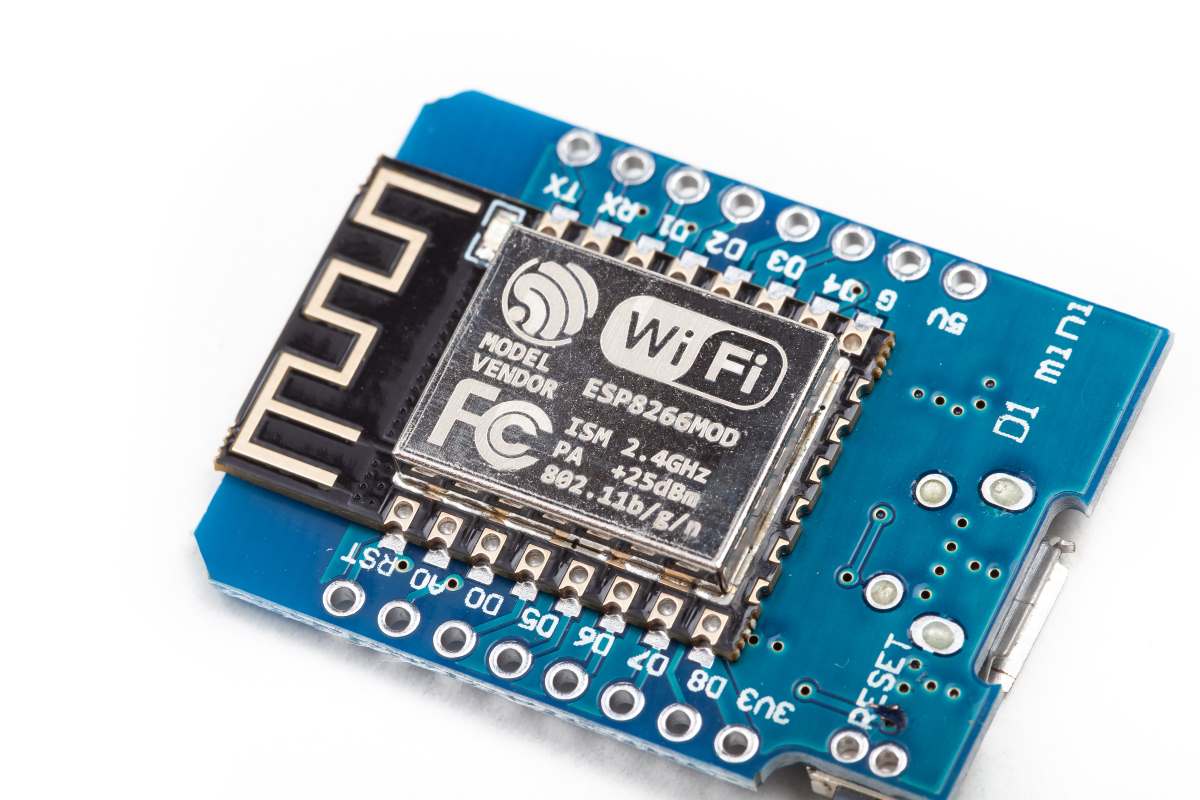
The early fame arose from the ESP8266, a budget-friendly Wi-Fi-enabled Microcontroller with very high prevalence in developer circles. The chip quickly gained popularity because it enabled wireless communication on a minimal budget and was easy to integrate into existing projects.
With the ESP32 the expansion resulted in a significantly more comprehensive platform. More processing power, additional interfaces, Bluetooth support, a larger software base, and improved power management made the chip a complete embedded SoC for connected products.
This evolved from a simple communication module into a versatile platform for sensor technology, control, data acquisition, local signal processing, and cloud connectivity.
Introduction to ESP32
The ESPressif SoC series is ultimately a family of integrated microcontroller SoCs with built-in wireless communication. The chip combines CPU cores, memory architecture, timers, GPIO, serial interfaces, analog functions, as well as Wi-Fi and Bluetooth on a single silicon chip.
Depending on the variant, the processors are based on Tensilica Xtensa or on RISC-V. Within the product family, there are single-core and dual-core versions, energy-optimized versions, as well as models with enhanced security features or special radio equipment.
The high integration density reduces external add-ons. For many applications, a power supply, antenna design, flash connection, and a few peripheral components are sufficient to build a complete product.
Distribution and market position
The ESP32 is one of the most widely used platforms globally for connected embedded systems in the low to mid-performance range. Its widespread adoption is due to several factors: low unit costs, readily available wireless technology, extensive documentation, affordable development boards, and strong community support.
Many developers come into contact with SoCs early, often through platforms like Arduino or Raspberry Pi. This makes the platform familiar to beginners, while at the same time it is used in professional products in high volumes.
Typical applications include:
- Smart Home
- Wireless Sensor Nodes
- IoT end devices
- Measurement systems
- HMI panels
- Data logger
- Gateway systems
- Remote controls
- Battery-powered radios
- Home appliances with app connectivity
ESP32 Architecture
Architecture and Series Structure
The term ESP32 refers to a product family with several technical lines. These include, among others, variants such as ESP32-S2 or ESP32-H2.
These models differ in CPU architecture, radio standard, security features, I/O equipment, power profile, and target market.
Key features within families are:
- CPUs with Xtensa or RISC-V
- Single-core or dual-core architecture
- Wi-Fi 4 / 2.4 GHz
- Bluetooth Classic on specific models
- Bluetooth Low Energy
- Zigbee / Thread in newer variants
- USB Support on Selected Chips
- Vector instructions or AI acceleration on individual series
- Security features such as Secure Boot and Flash Encryption
Hardware architecture
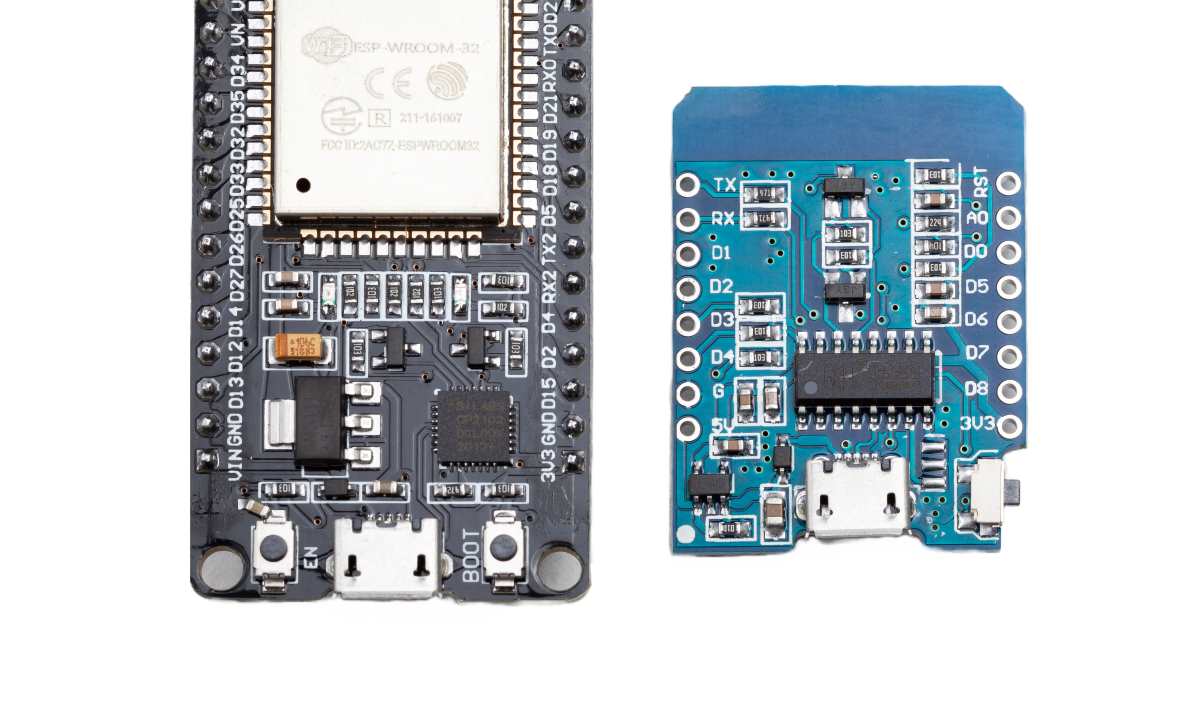
ESP32 systems mostly work with internal SRAM and externally connected SPI-Flash. Many modules already integrate the flash within the housing or on the module board. Some variants additionally offer PSRAM for more memory-intensive applications such as GUI, audio, or image processing.
The typical structure of an ESP32 module includes:
- System on a Chip
- Quartz
- Flash memory
- RF front end
- PCB antenna or U.FL connector
- Power supply
- HF shielding for modules
Finished modules significantly accelerate product development, as the radio design, matching network, and certification basis are often already prepared.
Peripherals and Interfaces
A key reason for the widespread use is the extensive peripheral equipment. Depending on the type, functions such as the following are available:
- GPIO
- UART
- SPI
- I²C
- I²S
- CAN / TWAI with specific variants
- Pulse Width Modulation
- ADC
- DAC on selected series
- Touch Inputs
- Timer
- Watchdog
- RTC Domain
- USB OTG / USB Serial on some models
- SDIO
This allows for the integration of sensors, displays, audio systems, motor controls, memory expansions, and industrial communication.
Funk technology
Integrated connectivity is the core feature of the platform. Wi-Fi enables local network connection, OTA updates, web server functions, MQTT communication, or cloud access. Bluetooth is often used for provisioning, smartphone connectivity, short-range control, or BLE sensor technology.
Newer variants add further standards such as Zigbee, Thread, or Matter-related use cases. This gives the platform a strong presence in the smart home environment.
Software and Development
The development occurs primarily in C and C++. The central software base is the official ESP-IDF (Espressif IoT Development Framework). This includes drivers, a build system, network stacks, security libraries, OTA mechanisms, and middleware.
Other common ones include:
- Arduino Core
- PlatformIO
- MicroPython
- Rust Projects from the Community
- LVGL-based GUI stacks
- Home automation frameworks like ESPHome
A typical characteristic is the close connection between firmware and network software. Developers often work simultaneously with hardware access, RTOS tasks, TLS communication, web interfaces, and update mechanisms.
Security
Depending on the variant, the ESP32 offers established security features such as secure boot, flash encryption, TLS communication, signed firmware updates, hardware random number generators, and mechanisms for secure key storage. These features are particularly relevant for IoT devices, gateways, and networked embedded systems that are constantly connected to local networks or cloud infrastructures.
However, when evaluating such platforms, a sole focus on technical features is insufficient. Security increasingly encompasses the aspect of trustworthiness of the manufacturer and the entire ecosystem. This includes transparency on security issues, quality of documentation, handling of vulnerabilities, update policies, long-term maintenance of SDKs, as well as the reliability of supply chains and product maintenance.
In March 2025, Analyses from Tarlogic Security to discussions about undocumented manufacturer-specific Bluetooth HCI commands in older ESP32 variants. These were debugging and testing functions within specific implementations. Espressif Systems stated that these functions were not remotely accessible via regular Bluetooth connections, primarily served internal development purposes, and that newer series were not equally affected by them. Additionally, measures were announced for further restriction and improved documentation.
The worldwide prevalence of the platform also makes the ESP32 a security concern. Widely used radio platforms naturally attract more attention from security researchers, attackers, and industrial risk analyses. This connection is addressed under in our analysis taken up, which deals with the strategic importance of massively deployed, networked embedded components.
Both aspects do not necessarily point to a special or exclusive security problem of the ESP32 platform. However, they show that in professional embedded systems, alongside classic security functions, questions of trustworthiness should also be systematically considered. This includes manufacturer transparency, response speed in case of incidents, maintainability, origin, long-term availability, and the general trustworthiness of the platform provider.
Relevance in electronics development
In engineering, the ESP32 is often chosen when short development times and integrated connectivity are required. Many projects benefit from not having to develop a separate Wi-Fi or Bluetooth solution. This saves board space, bill of materials, integration effort, and development time.
The question „What can I do with the ESP32“Here are some typical real-world applications:
- WLAN-enabled sensor boxes
- Cloud monitoring devices
- App-controlled household functions
- BLE Beacons
- Access systems
- Smart Meter Interfaces
- Remote I/O Nodes
- Audio streaming devices
- Portable data loggers
The platform is also widely used for proof-of-concepts and rapid MVP development.
In addition, the ESP32 boasts a very large global ecosystem. This includes:
- Open-source libraries
- Board manufacturer
- Forums
- Sample Projects
- YouTube tutorials
- University Projects
- Industrial Integrators
- Home Automation Communities
Ready-made implementations already exist for many common tasks, which reduces development time.
Developers are still wondering: Which is better, ESP32 or Arduino? Both platforms are essentially equivalent. Arduino is particularly popular due to its extensive library ecosystem and ease of use. This makes Arduino well-suited for rapid development and simple projects. ESP32 offers greater integration, higher computing power, and built-in Wi-Fi and Bluetooth. This makes the platform particularly popular for networked embedded systems. A common issue with both is that large frameworks and numerous libraries can quickly give the impression of „bloatware.“ Furthermore, not all libraries are designed for real-time performance and resource optimization. Therefore, the quality of the software architecture is more critical than the platform itself.
Classification
The ESP32 is one of the most relevant general-purpose platforms for wirelessly networked embedded systems. Its importance lies in its high market penetration, ease of access, affordable cost structures, and extensive software base. Millions of developers are familiar with the platform, and many companies use it in mass-produced products.
Zurück zum Glossar