The development of defense electronics and military electronics is subject to special regulations. Companies that wish to act as electronics development partners in defense or as technological development partners for the German armed forces or a NATO partner must meet strict criteria. B2B buyers and technical decision-makers in the defense and security industry pay close attention to compliance and security along the entire supply chain. From handling sensitive information to the origin of components, there are high hurdles. Electronics for military applications, in particular, place special demands on manufacturers and service providers with regard to the protection of secrets. The following will explain the central requirements in a structured manner.
Compliance with State List (§13 SÜG) and Nation Requirements in NATO Armaments Projects
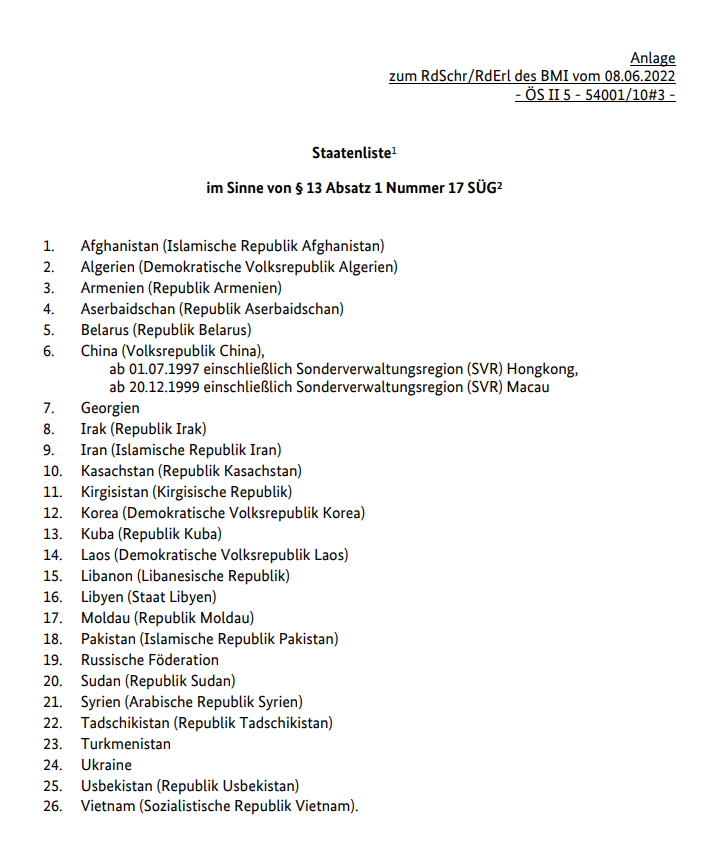
Security begins with the personnel and the countries involved. The German Security Vetting Act (SÜG) provides for a so-called List of states – a list of states where individuals in security-relevant positions are suspected of posing particular risks. This list last included 26 countries (as of 2022), including, for example, China, Russia, Iran, North Korea, Syria, and other states outside the NATO/EU area. Service providers in the defense industry electronics sector must ensure that employees with access to sensitive defense projects do not have unexplained connections to such countries. Stays, family ties, or previous employment in these states must be disclosed and can lead to Conditions or exclusions during security checks. In practice, employees of these origins are excluded from NATO armament projects. The SÜG interprets the employment of staff from these nations as risky, which severely restricts or prevents the deployment of these employees in electronics for defense systems. Exceptions sometimes concern private-sector armament projects without state involvement, such as self-financed armament projects without Bundeswehr or NATO customers.
In addition, special nationality requirements apply to NATO armament projects. For projects classified as NATO SECRET or higher, generally only nationals of NATO member countries are allowed to access the relevant information and systems. For example, only citizens of the 32 NATO countries may be hired for positions with access to NATO secrets. In exceptional cases, close partner countries such as Australia, Sweden, or Switzerland are involved, but this also requires special agreements.
A defense development partner must therefore select its personnel accordingly and initiate security checks (Ü1/Ü2/Ü3 according to SÜG) early on if necessary. In practice, this means: Those who, for example, develop embedded systems for a NATO project should only plan with personnel who can obtain the necessary security clearance (typically NATO nationals with a clean record).
The company structure also plays a role – development partners from non-allied states or development sites in critical countries are likely to face reservations from security-conscious clients. Adherence to the state list according to SÜG (Export Control Act) and NATO nation requirements is therefore a first filter to ensure trustworthy defense electronics development.
Exclusion of manufacturers with restrictions on military use
In addition to personnel, the selection of suppliers and manufacturers is coming into focus. In the defense industry, electronics are often dual-use – components can be used for civilian or military purposes. However, not every manufacturer is willing to see its products used in weapons or defense systems. Therefore, manufacturers with restrictions on military use must be consistently excluded.
In fact, some component manufacturers contractually prohibit the use of their products in armaments. For example, the Japanese manufacturer Murata prohibits the use of its electronics in conventional weapons or weapons of mass destruction in its export control guidelines. The memory manufacturer Kioxia even requires customers to provide assurances that its chips will not be used for weapons or military end-use applications. Such clauses are critical: if components from these manufacturers are nevertheless used, delivery stops or legal consequences threaten as soon as the intended use becomes known. A forward-thinking electronics service provider for defense therefore checks the general terms and conditions and export regulations of its suppliers at an early stage.
Other manufacturers take a somewhat softer approach: they merely recommend not using their products in military equipment, and exclude any liability in such cases. For example, Rohm clarifies that its components are not designed for military purposes or other „special applications“; if customers nonetheless use them in the defense sector, Rohm assumes no liability, unless expressly agreed otherwise. Similar statements can be found from manufacturers such as Littelfuse and Nexperia: they indicate that their products are not intended for military, medical life support, or safety-critical purposes – in case of misuse, warranties and guarantees expire. Components from such manufacturers should be avoided if possible, unless individual agreements are made. Otherwise, in an emergency, you risk losing support or replacement parts if the supplier learns of the military application.
In practice, we've seen that clients are increasingly aware of this. Some public tenders explicitly require ITAR-free components that are unrestricted for military use. For development partners and service providers, this strategically means that it must be clarified during the development phase whether a planned component is „military unobjectionable.“ Ideally, you should rely on suppliers who actively supply and want to support the defense sector. Electronics development for armaments should consider supplier selection as part of risk and requirements management to avoid later restrictions.
Implementation of an ISMS
Defense projects regularly involve confidential data, innovative technology, and sometimes even classified information. Therefore, a structured Information Security Management System (ISMS) is essential to protect these assets.
Companies gaining access to information classified as VS-NfD must submit a self-accreditation by September 1, 2025, at the latest, in which a responsible person confirms that all IT security requirements have been implemented – including an established ISMS. This can be achieved, for example, by applying the BSI IT-Grundschutz standards or obtaining ISO 27001 certification. Unfortunately, this represents a very broad range of measures. While BSI Grundschutz is still achievable for most companies, implementing ISO 27001 requires an implementation period of at least 2-3 years, as well as comprehensive management and auditing measures.
A pragmatic approach is possible for getting started. For example, VDA and TISAX self-assessments can help check systems for the fulfillment of IT security requirements. Measures such as access controls, training, emergency plans, regular audits, etc. usually have to be checked off in supplier audits anyway.
With an ISMS, an electronics service provider for defense systematically ensures that the confidentiality, integrity, and availability of sensitive information are maintained. A certified ISMS according to ISO 27001 enjoys high credibility with clients. Practice shows that this will likely become a full requirement for suppliers exchanging sensitive data with the defense industry by 2030.
Storage and Deletion Policies for Development Items
In defense electronics development projects, prototypes, samples, and test equipment embodying sensitive technologies often arise. Handling these prototypes requires rules for storage and erasure or destruction. On one hand, this is to prevent confidential information from leaking; on the other hand, it is to ensure efficient project organization and compliance with obligations to the client.
Storage policies define where and how development items are stored. In many cases, physical samples must be kept under security conditions comparable to those for classified paper documents. This can mean: lockable, alarm-secured cabinets or rooms, access only for authorized personnel, and an inventory of all prototypes with serial numbers and their whereabouts. Especially for security-relevant electronics for defense systems, it should be traceable at all times which prototype is where and who had access. An operational register can be helpful here, documenting the intake and release of confidential material. Furthermore, the principle of Minimum storagePrototypes should only be kept for as long as necessary for development and testing purposes. When projects are completed or samples become obsolete, deletion policies apply.
Documentation and traceability of all components used
In security-critical electronic defense systems, it is essential to document all installed components without gaps. Traceability (Traceability) means that for each component, it is recorded where it came from, its batch/lot number, and where it was used in the final product. This requirement serves several purposes: quality assurance, safety, and also later maintainability.
For one thing, quality assurance according to standards such as ISO 9001, EN 9100 (for aerospace) or NATO standards (e.g. AQAP) requires complete documentation. Defense projects, particularly in defense electronics, are often subject to supplementary contracts that require reports on component origins and tests. For example, German Federal Armed Forces entities (such as the Central Military Quality Assurance) check during audits whether the contractor has established testing and documentation processes and also has control over its supply chain. An electronics service provider in defense must therefore be able to prove at any time which component was installed by which manufacturer in which version.
Thorough traceability also allows for precise knowledge of what needs to be replaced during modifications or upgrades in the field. For example, if an electronic component for defense systems in the field requires a software update, it is crucial to know the current hardware status – this is only possible with clean documentation of all components.
Cooperation with Proven Defence EMS
Choosing the right manufacturing partner is also strategically crucial for development projects in the defense sector. Often, development service providers do not have their own production lines but work with Electronics Manufacturing Services (EMS) together, specializing in manufacturing and assembly.
European or German manufacturing facilities are subject to local export control laws and safety standards, which reduces the risk of politically motivated supply disruptions. Proximity is also a factor: a German client can audit an in-country EMS or visit it in person much more easily if problems arise, compared to if production were located, for example, in the Far East.
In addition, there is the protection of intellectual property: within the EU, there are far-reaching rules for the protection of trade secrets. A technological development partner of the Bundeswehr that manufactures in Germany can more easily ensure that its blueprints and source codes do not leak uncontrollably. If, on the other hand, manufacturing takes place in regions with different legal situations, the risk of know-how loss increases. Furthermore, there is the Spy protection a role.
EMS even advertise, in part, that they can produce ITAR-free – meaning they preferentially use components from non-US sources to avoid triggering US re-export restrictions. Something like this can be a competitive advantage if the end customer desires export flexibility.
Conclusion
The listed requirements make it clear that projects in the field of electronics for military applications must be carefully considered on many levels – from personnel security and supplier selection to quality and information security aspects. Service providers and development partners who meet these requirements build trust and minimize risks for their clients. Those who meet the mentioned criteria not only position themselves as the first choice development partner for the defense industry but also contribute to the sovereignty of the European Union.